1950s Propaganda Posters of New China
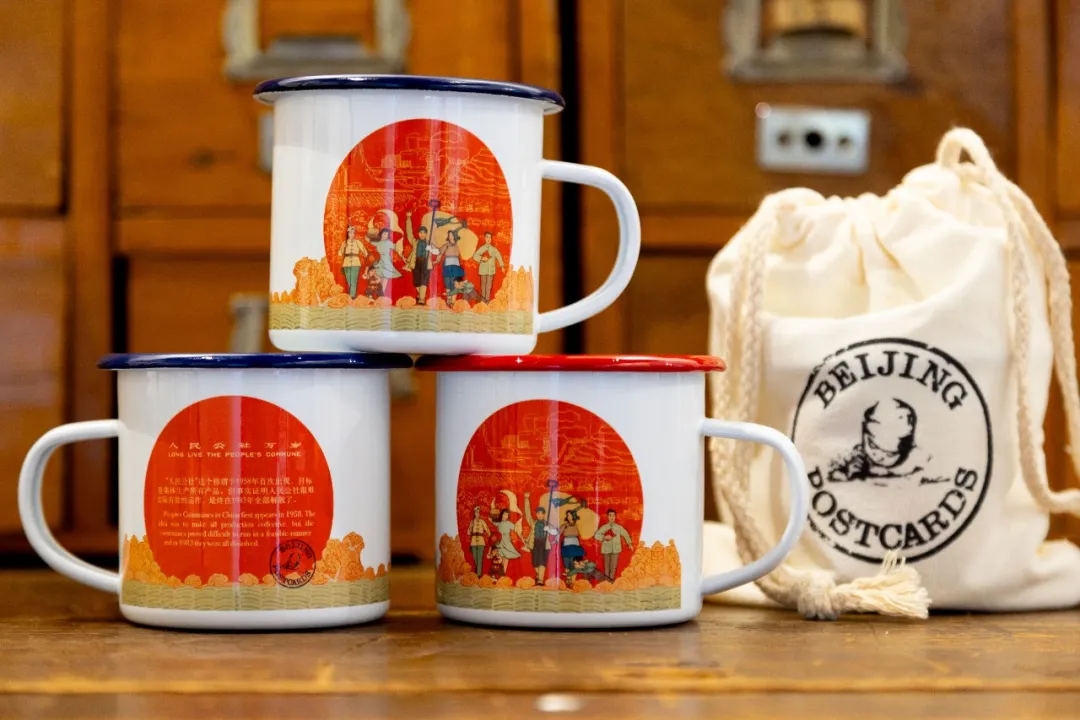
In the 1950s a spirit of hope seemed to push China magically forward. We have started to collect early propaganda posters from the time just after liberation. The pictures are available in our store and online shop as posters, jigsaw puzzles, enamel mugs and notebooks.
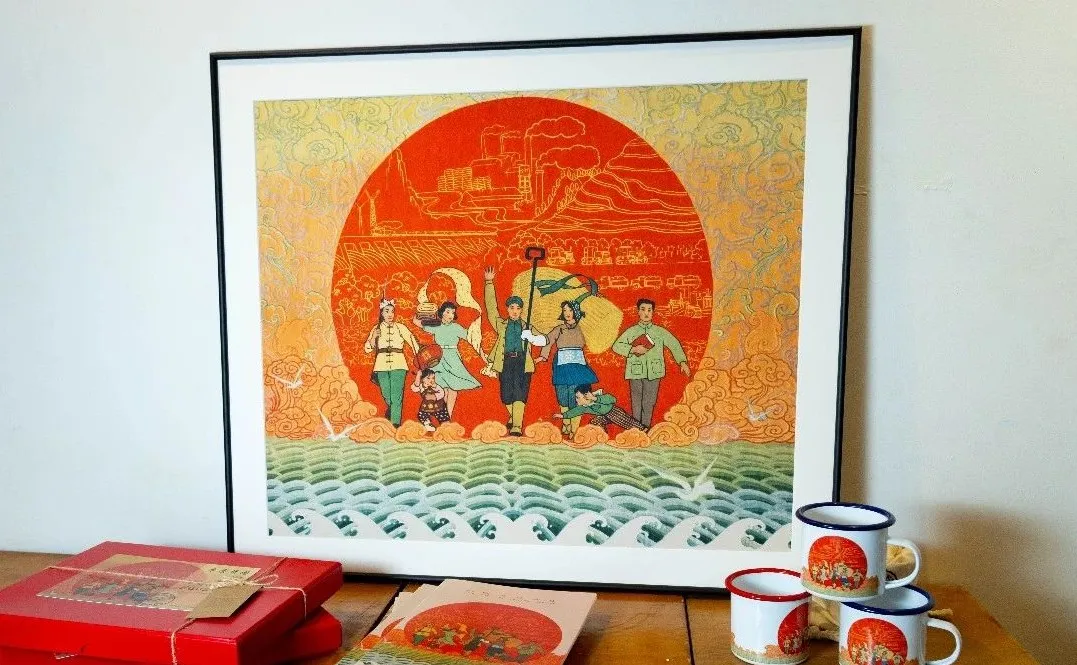
People's Commune
The term "renmin gongshe", or People's Commune, first appeared in China in the socialist magazine Red Flag in 1958. In the magazine, an article described the many benefits of collective production methods as opposed to the wastefulness of capitalist liberalized production. The sudden appearance of this new concept is often described as spontaneous, but it is difficult to believe that the article was entirely coincidental because only a month after its publication, an enormous transformation in the Chinese countryside began when independent farms were reorganized into collective production on a massive scale.
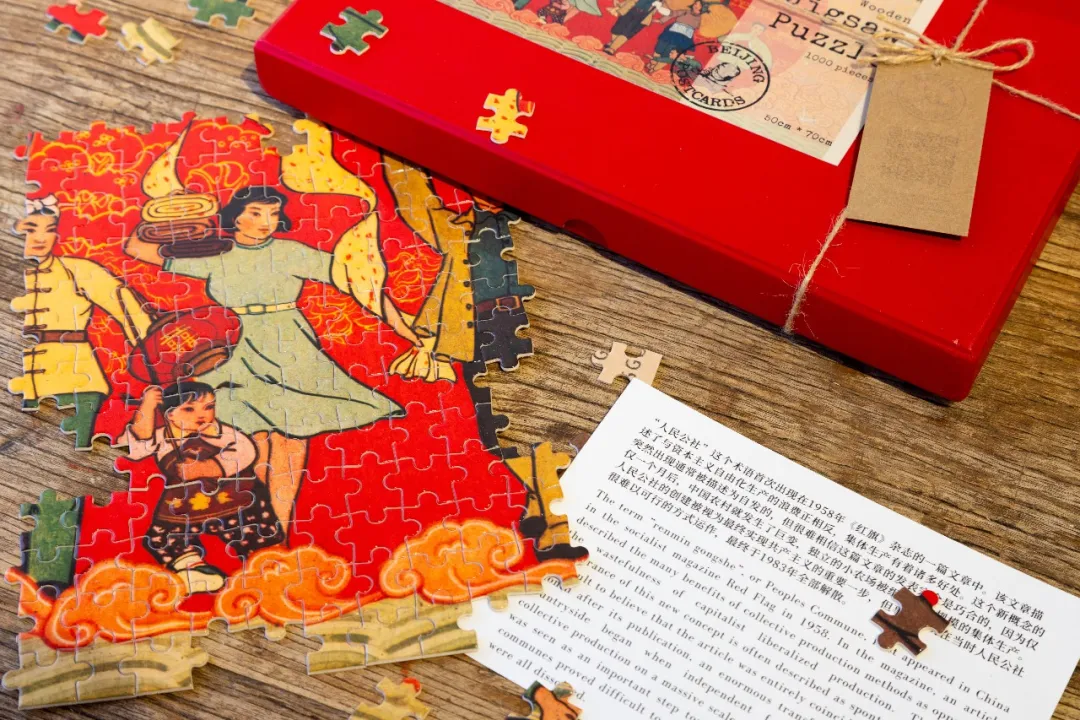
The creation of People's Communes was seen as an important step towards the communist end goal, but the communes proved difficult to run in a feasible manner, and in 1983 they were all dissolved.
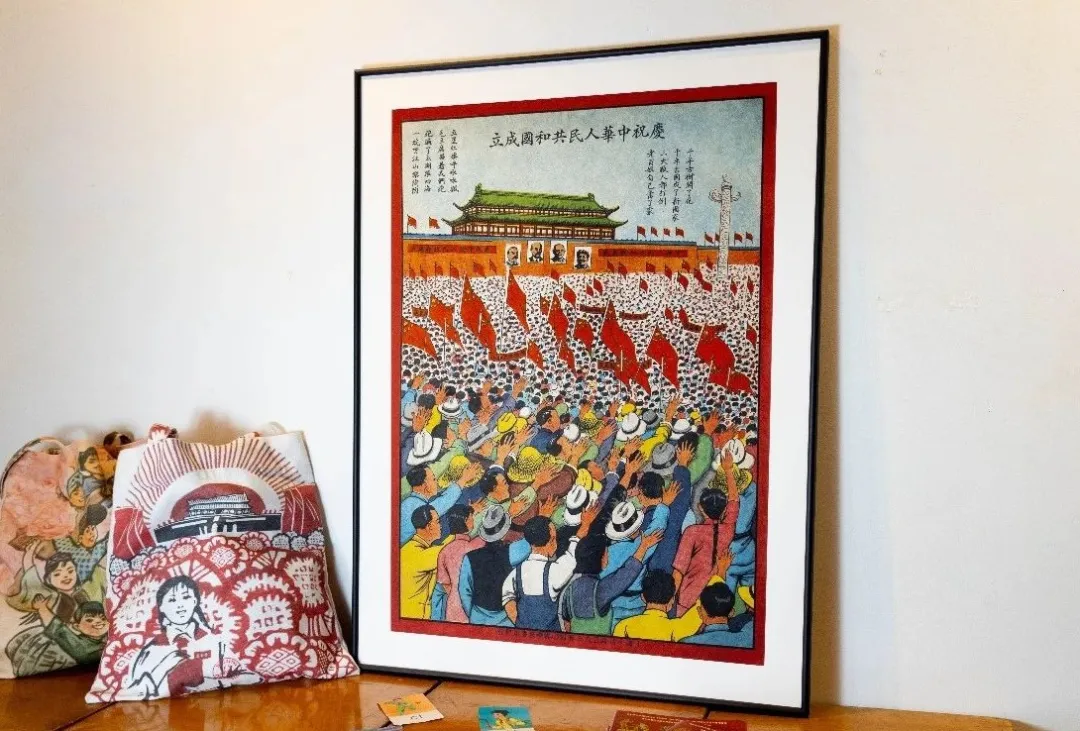
Celebrating the Establishment of the Peoples Republic
Up through the 1950s pictures of Communist leaders were displayed at the Tiananmen gate, at special occasions like May 1 or October 1, in this picture Stalin, Lenin, Sun Zhongshan and Mao Zedong's portraits can be seen on display.
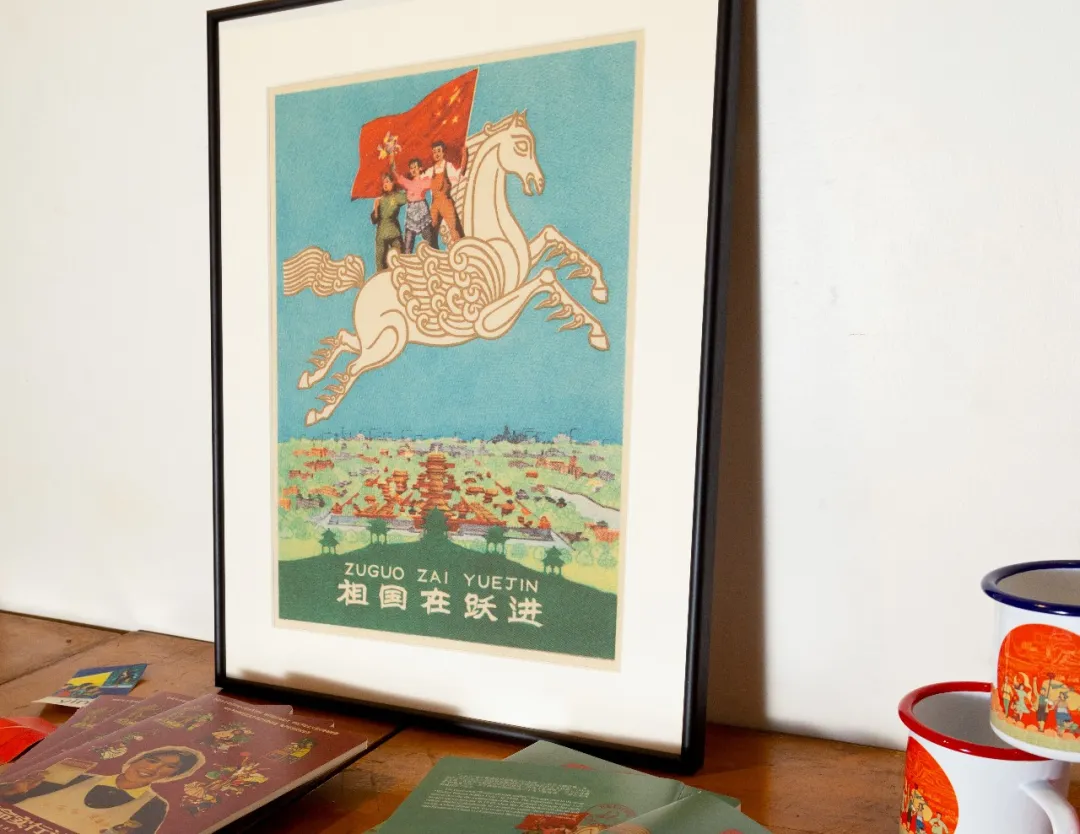
The Motherland Is Leaping Forward
The expression "Worker Peasant Soldier" first appeared in the song “Worker Peasant Soldier Unite” in 1924. The expression became a set term to describe the socialist idea of the three groups of people that ought to carry society forward. In 1942, when Mao decreed that art and culture should predominantly be created to inspire these three pillars of society, a whole artistic style was created in order to inspire the continued transformation of China in a Communist direction.
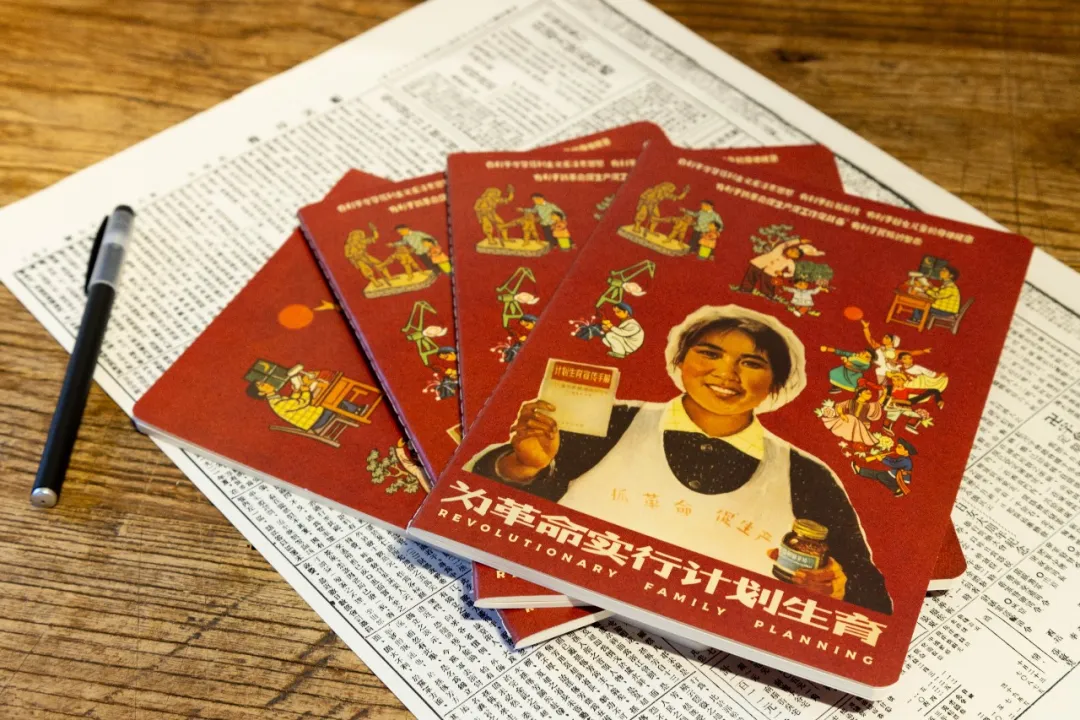
Revolutionary Family Panning
In 1974, a campaign aimed to control China's rapidly growing population by encouraging people to have fewer children. However, it wasn't until the early 1980s that the so-called One-Child Policy was formally implemented. Notably, in China, the policy was never referred to as the "one-child policy" officially but rather as "family planning." This turned out to be fortuitous given that the very same offices that previously promoted smaller families are now advocating for larger ones.
Check out our online store for more: