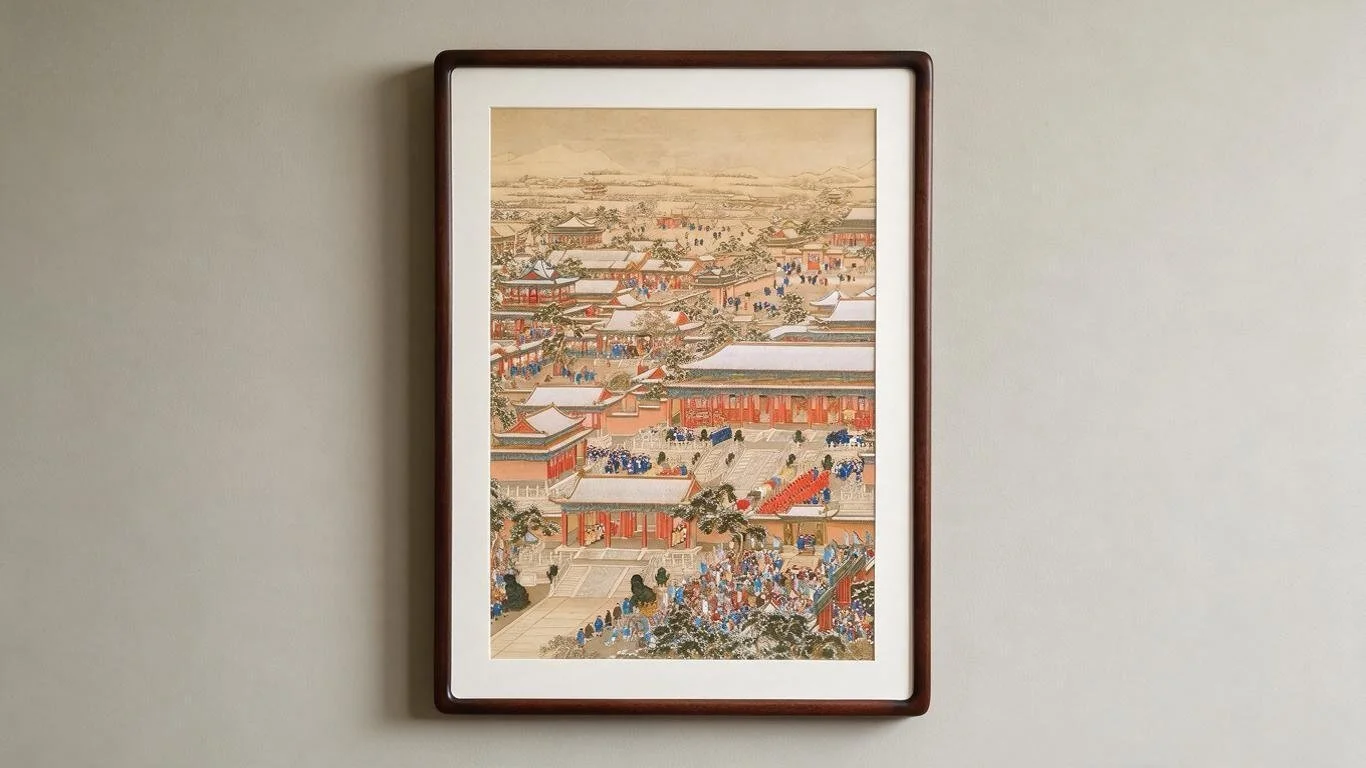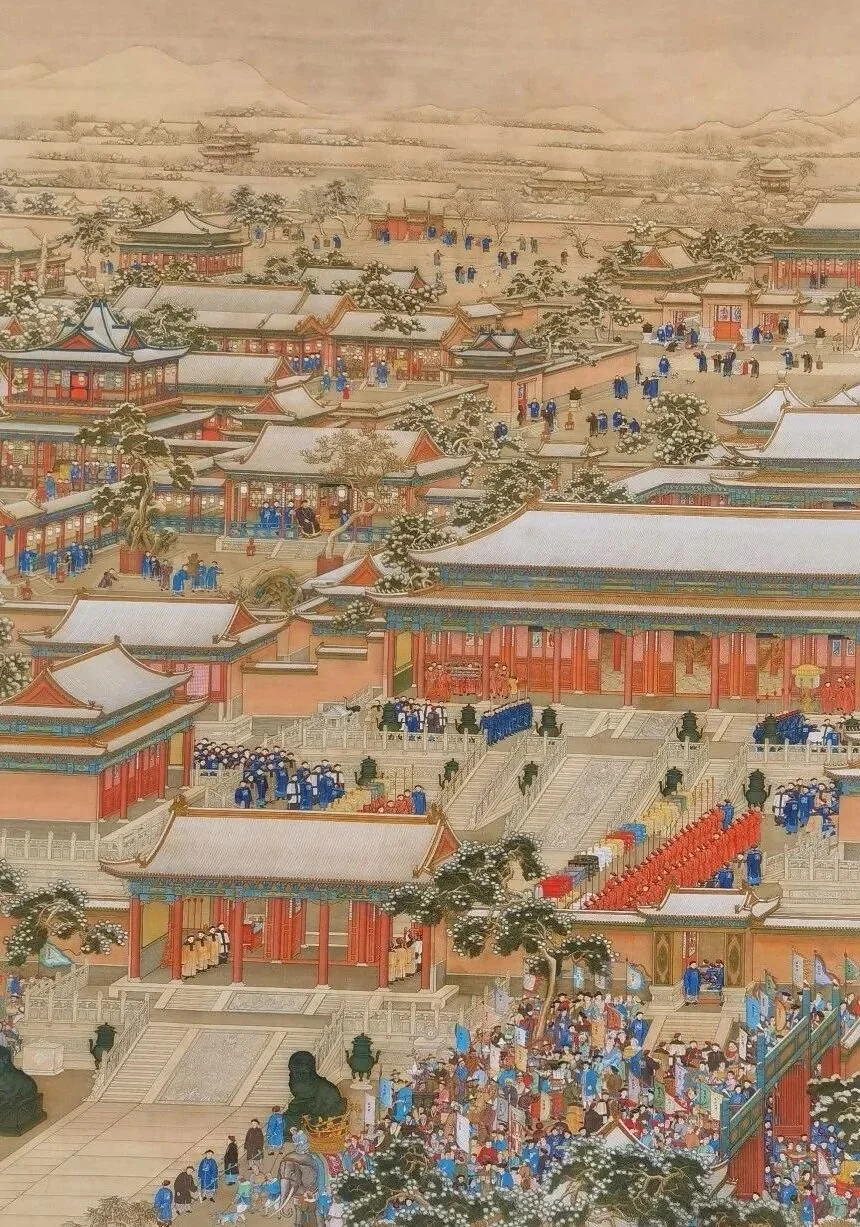
In the 1760s a picture called "10,000 nations visit the empire” was painted at the Imperial court in the Forbidden City. Who painted the picture is unknown, but it provides a fascinating peek into palace life and is full of small details that tell stories with a quirky, humorous vibe. We have chosen 30 details from the map that all give us an interesting peek into life in the Imperial Palace. Below you can find the first five.
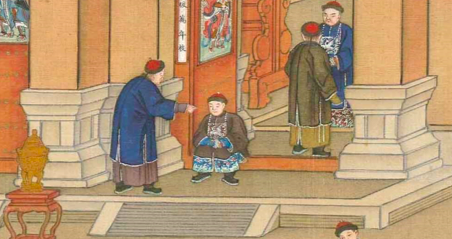
Thresholds
An official appears to be telling an underling sitting on a high palace gate threshold to stand up. All of the gates in the Forbidden City had high thresholds. The height of the thresholds made people enter compounds in an appropriate, respectful way, and the height was allegedly also believed to ward off evil spirits from entering a compound. Everything in the Palace was dictated by ritual, and it was not well seen to step on thresholds or, needless to say, sit on them.
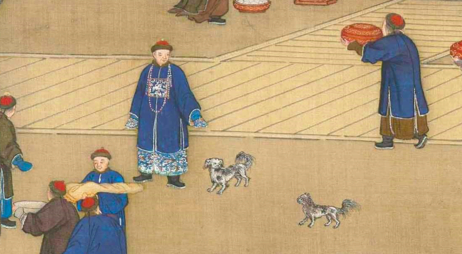
Sleeve Dogs (Pekingese)
Small dogs called "sleeve dogs" were bred at the Imperial court. The dogs were purely kept for entertainment; however, in 1860, when the French and the British occupied Beijing and destroyed the old summer palace (Yuanmingyuan), the Imperial dog kennel was stolen, and one of the puppies was given to Queen Victoria. Later the dogs became very popular in Europe and were simply just dubbed "Beijing dogs" or "Pekingese."
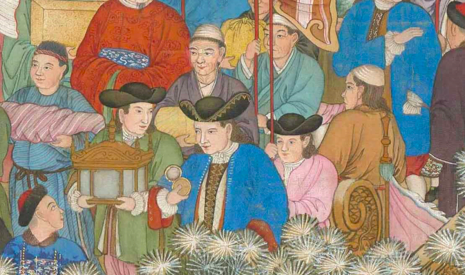
Watches
In the bottom of the picture, more than 40 nations are seen clutching gifts for the emperor in their hands. Many European envoys have chosen pocket watches and sizeable ornamental clockworks to present to the son of heaven. Clocks were one of the most treasured gifts in China, so for hundreds of years, clocks were a common gift when diplomats desperately tried to ingratiate themselves with the emperor and secure lucrative trade deals for their countries.
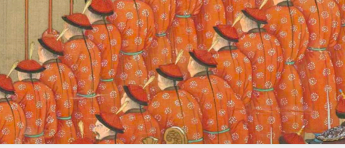
The Queues (pigtails)
All Chinese men in the picture have long pigtails, also referred to as queues. Growing long queues was a hairstyle that the Manchus demanded that all Chinese adopt after they conquered the capital in 1644 and later the whole empire. The Manchus traditionally shaved their foreheads so that they did not get hair in the eyes while riding horses. The pigtails were used to wrap around the head when wearing a helmet and sometimes even as a pillow while sleeping, but after the conquest, the manchu hairstyle also became a sign of submission.
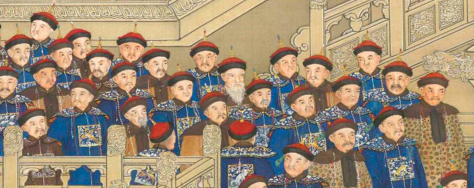
Jesuits
A group of high-ranking officials are seen just below the throne hall. Among the officials there is a face with unmistakably European features. The figure is almost certainly one of the Jesuit monks that worked for the Imperial government. In the early 1600s the Jesuit Matteo Ricci impressed the Imperial court with such lavish gifts that he was allowed to stay in the capital and even open churches. The white-bearded Caucasian in the picture could very well be Ferdinand Augustin Hallerstein (1703-1774), the last Jesuit to manage the Imperial observatory.