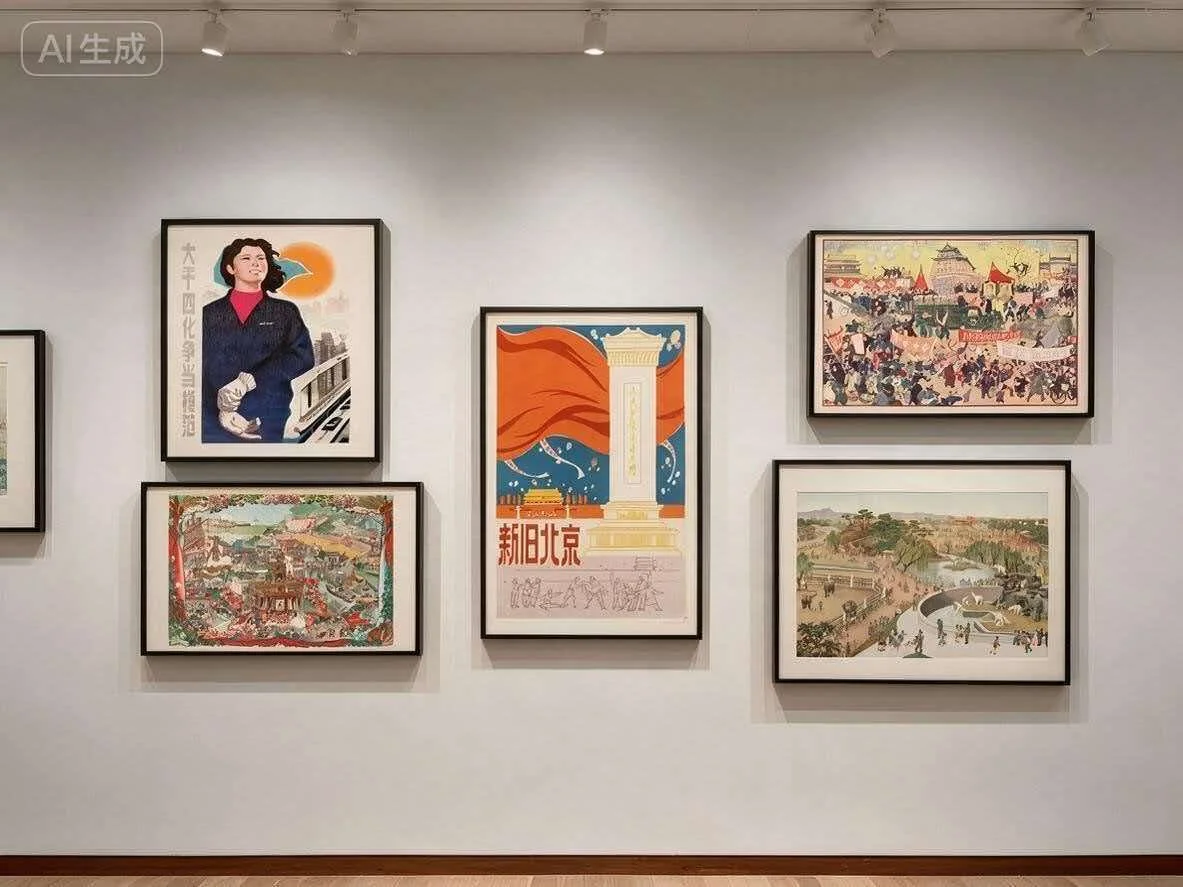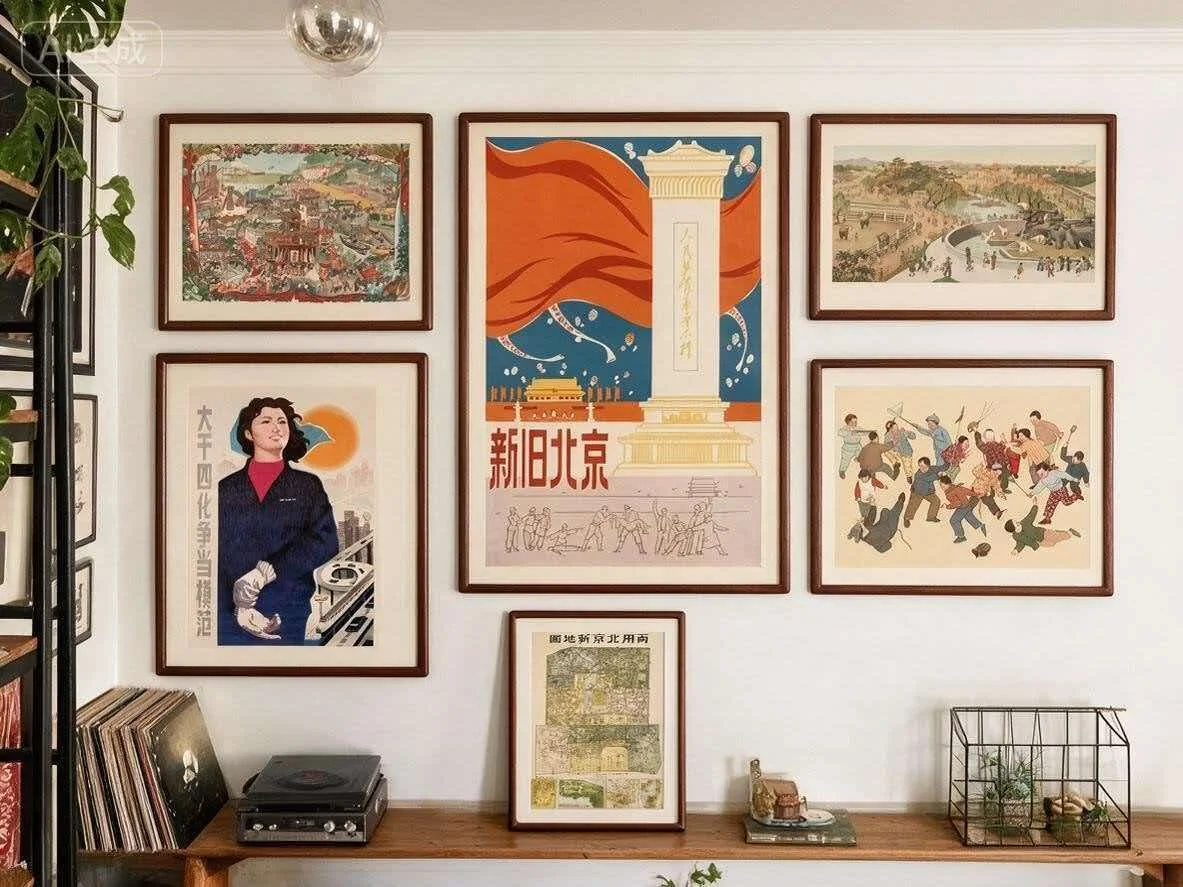
In the 1950s a spirit of hope seemed to magically push China forward. We have started collecting propaganda posters, focusing not so much on iconic pictures of the great leader but more on the campaigns and ideas that shaped a whole new societal structure in China. We are looking for the human element inside the propaganda machine. These are the newest editions to our poster collection.
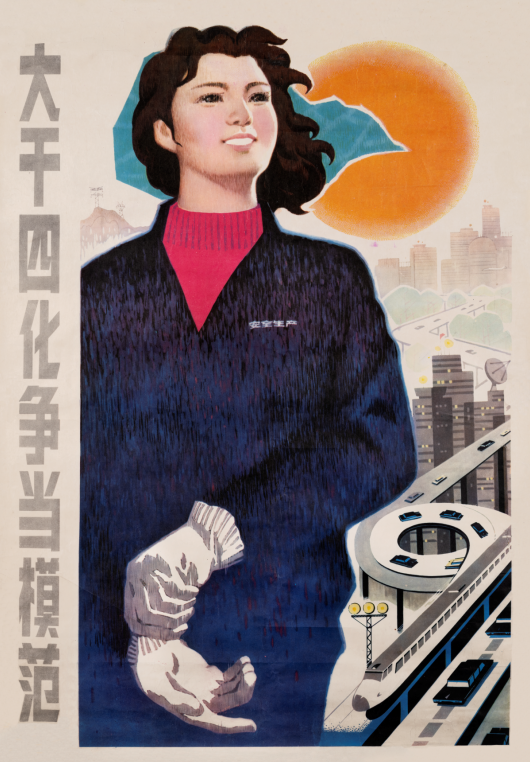
Model Workers
The concept of Model Workers (劳动模范) is a Chinese communist idea dating back to the civil war in the 1930s. Manual labor was traditionally looked down upon in Chinese society; however, to change this, the Communist Party started rewarding model workers of society so that the masses could learn from and even glorify the value of manual labor. The text says, "Strive to be a model worker to achieve the four modernizations." The Four Modernizations was a concept launched by Premier Zhou Enlai in 1954, aiming at modernizing Chinese industry, agriculture, technology, and the military. This poster was created by Li Zhiguo (李志国) in 1980.
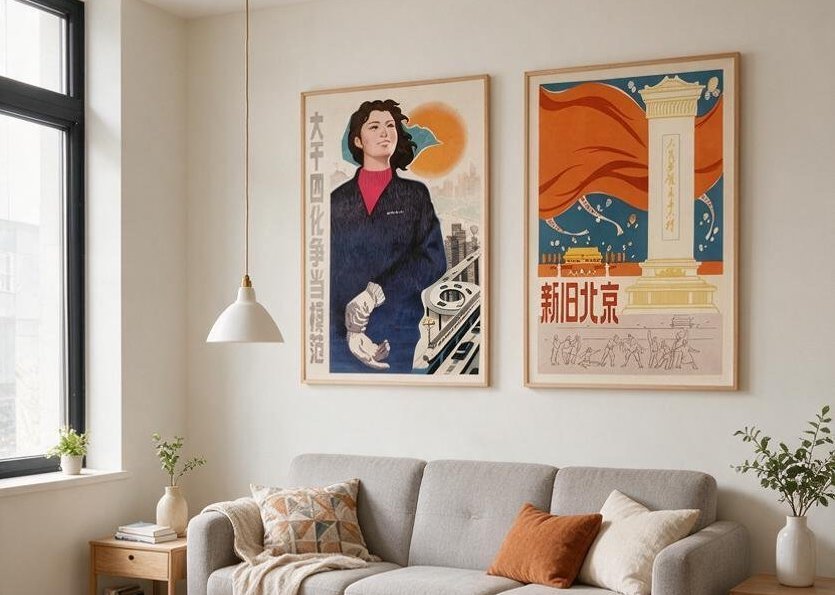
Old and New Beijing
In the Republican period, everything modern was labelled "new" (新). The idea of a new society developing out of the old feudal state was not only a socialist concept, but after 1949, the idea of 'new China' became almost exclusively a communist term. On this poster, the suffering of the people belonging to the old feudal society is depicted at the bottom of the picture in black and white. The monument of the people's heroes represents the struggle of the masses, and Tiananmen Gate, from where the People's Republic of China was proclaimed in 1949, represents new China. This poster was created by E. Yi (鄂毅) and first printed in 1965.
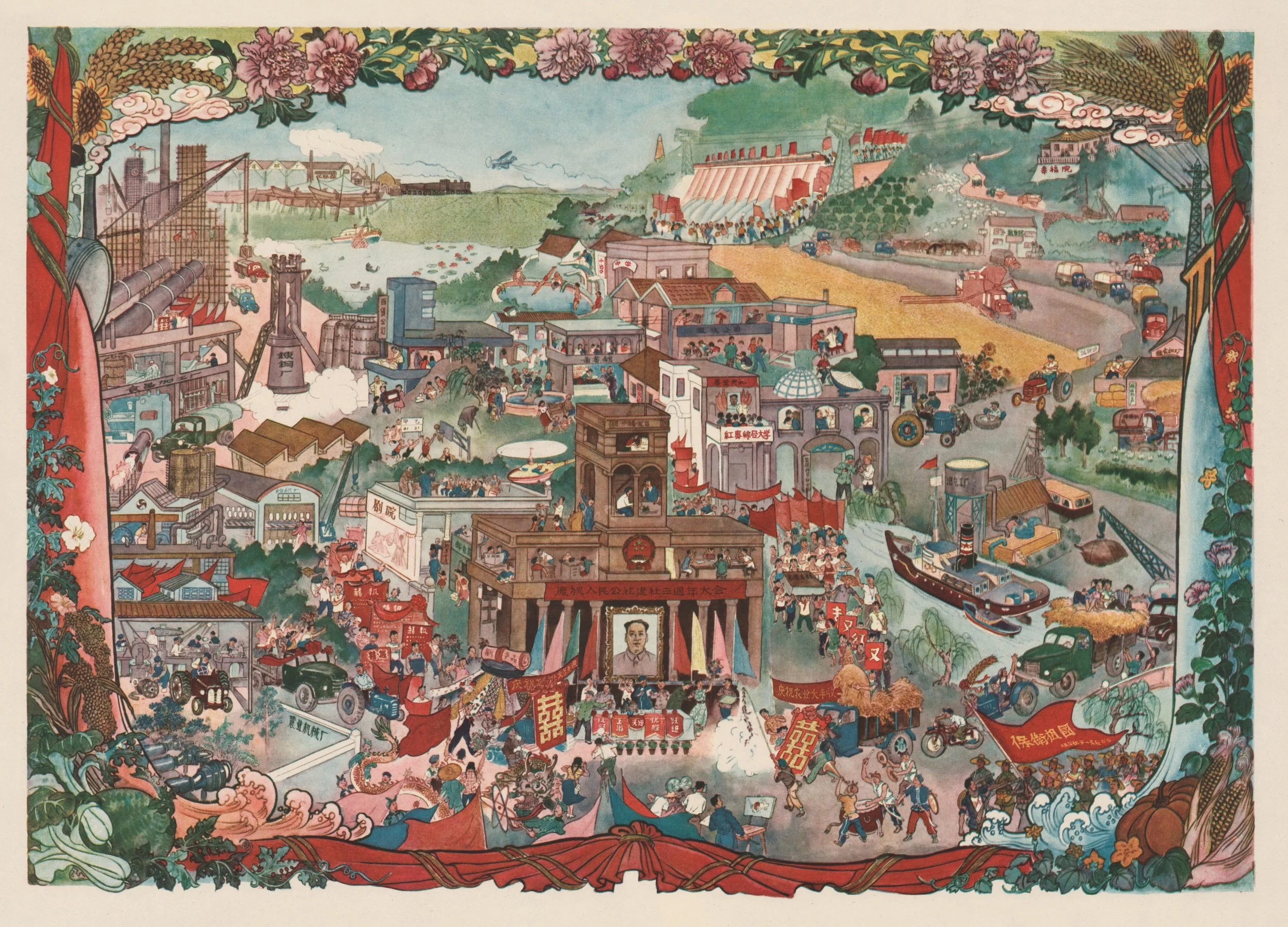
People's Commune
The term "renmin gongshe," or People's Commune, first appeared in China in the socialist magazine Red Flag in 1958. In the magazine, an article described the many benefits of collective production methods as opposed to the wastefulness of capitalist liberalized production. The sudden appearance of this new concept is often described as spontaneous, but it is difficult to believe that the article was entirely coincidental because only a month after its publication, an enormous transformation in the Chinese countryside began when independent farms were reorganized into collective production on a massive scale. This picture created by an unknown artist in the late 1950s illustrates the dream of self-sustaining, fast-developing communal societies in the countryside.
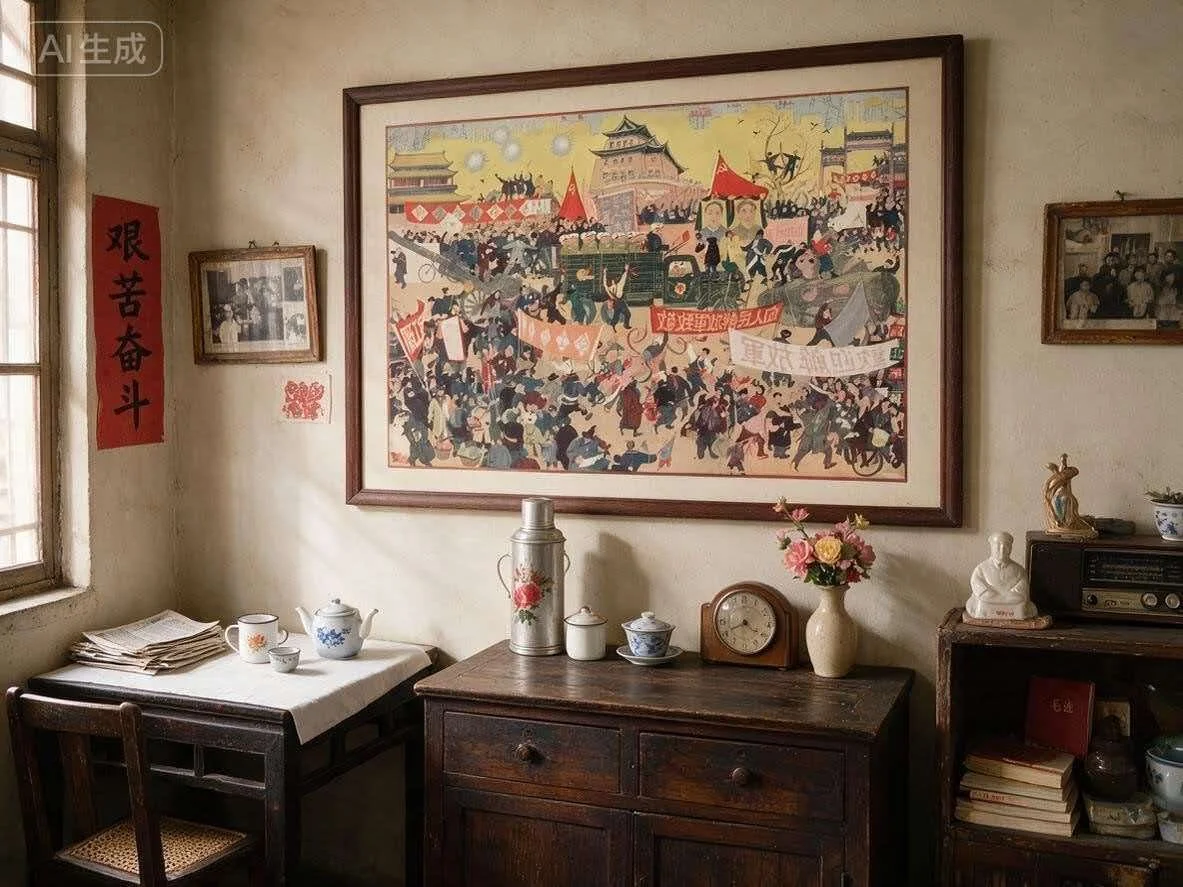
Liberation
The march of the Communist liberation army into Beijing in 1949 is an almost mythological event in Chinese history. The painter Dong Xiwen created this picture of the incoming troops in 1950 and was subsequently selected that same year to create pictures of significant events in Chinese revolutionary history. Dong Xiwen is widely known for creating the picture "Founding Ceremony of the Nation."
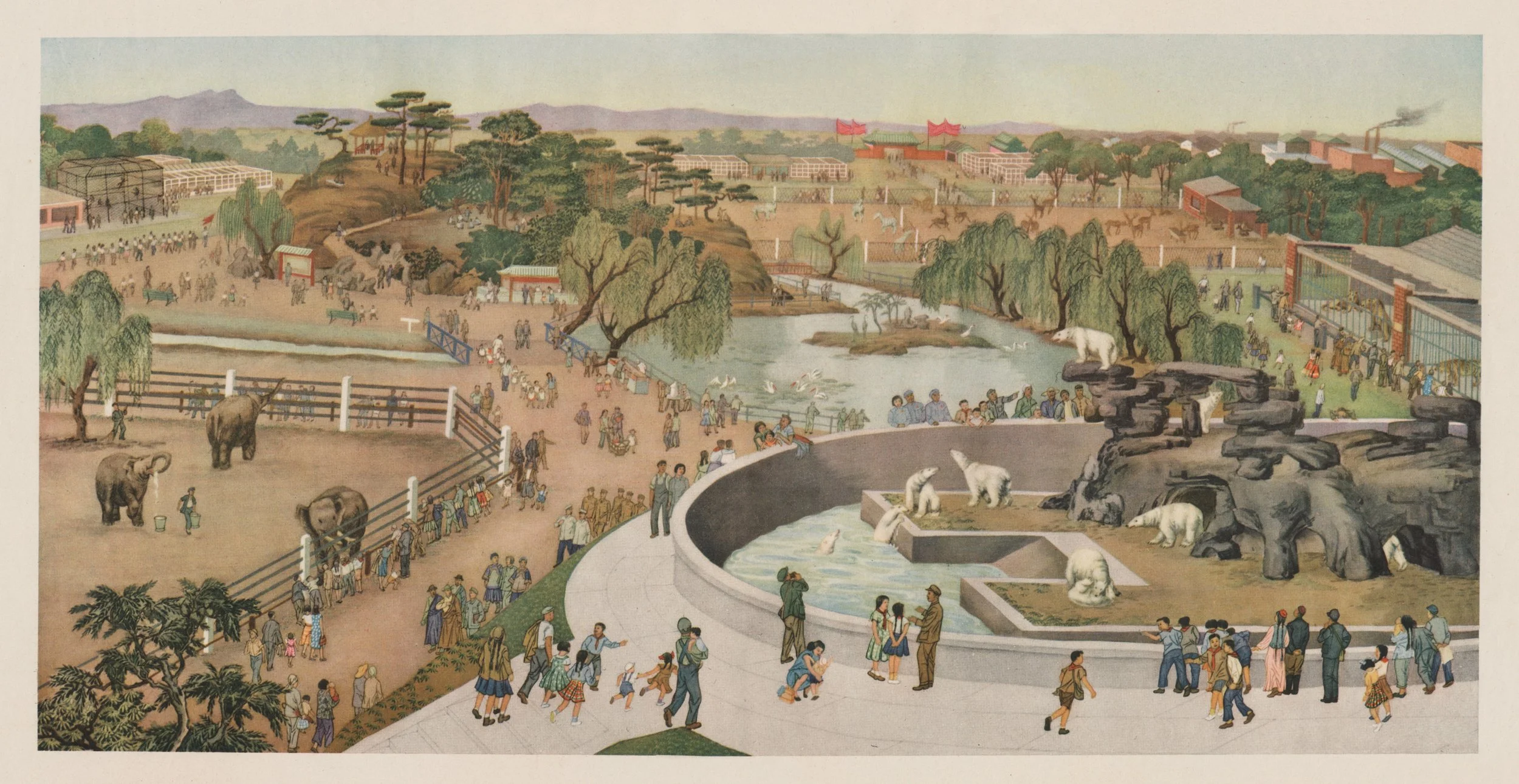
The Beijing Zoo
The Beijing Zoo dates back to the Qing dynasty. In 1906 the viceroy of Shanxi returned to China from a trip to 17 different countries; he brought back a collection of animals from Germany, which was a present for Empress Dowager Cixi. The animals were kept at a park just west of the old city wall, and the place was, in 1908, opened to the public to become Beijing's first public zoo. During the civil war there were allegedly only a one-eyed ostrich, 12 monkeys, and a few parrots left at the zoo. However, after 1949 the park was restored for the benefit of the people, as can be seen in this picture from 1954; the city had not completely absorbed the zoo yet in the 1950s.
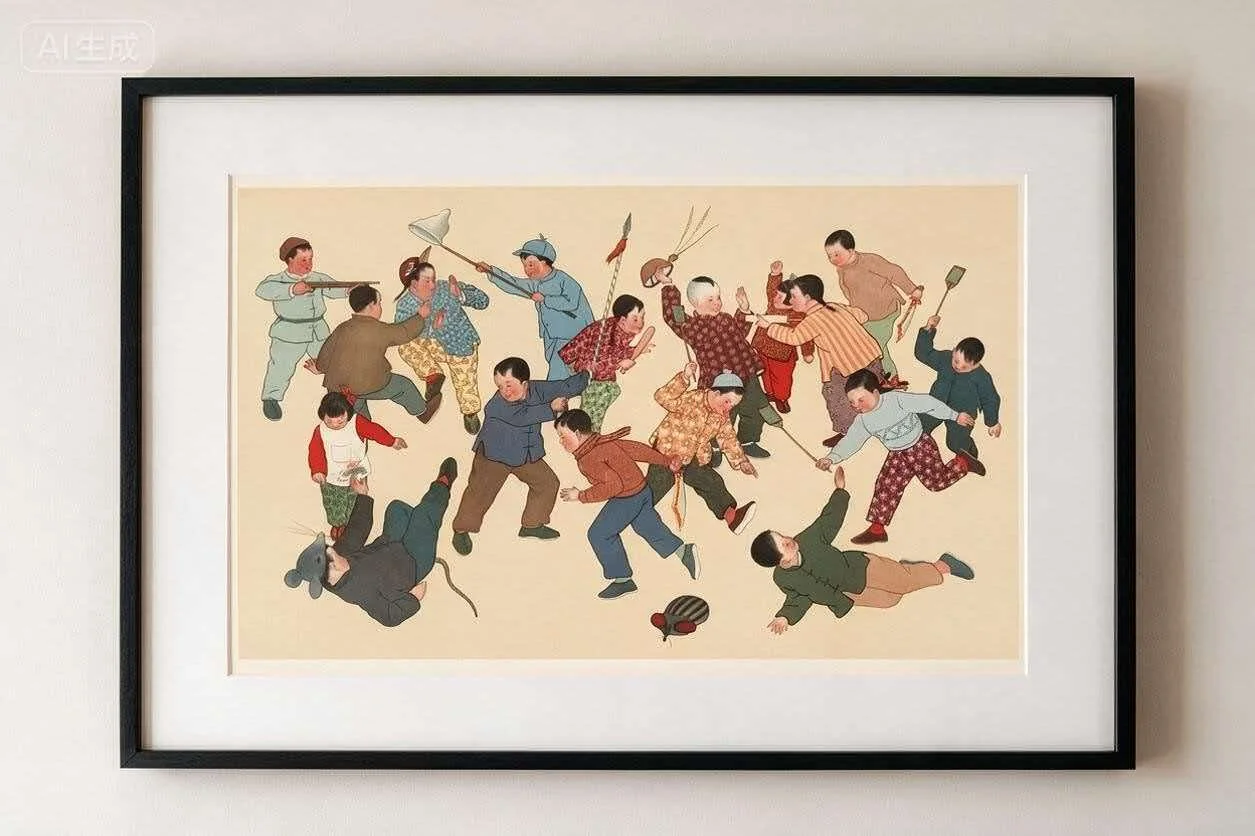
Eliminate the Four Pests
In the 1950s a campaign called 'Eliminate the Four Pests' (除四害) was launched. The goal was to heighten sanitary conditions and increase harvest output by simply eliminating certain animals. The vision was to take on nature itself and submit it to the will of man. This picture from the 1950s depicts how children in a kindergarten are acting out the fight against the four pests: sparrows, rats, mosquitoes, and flies.